
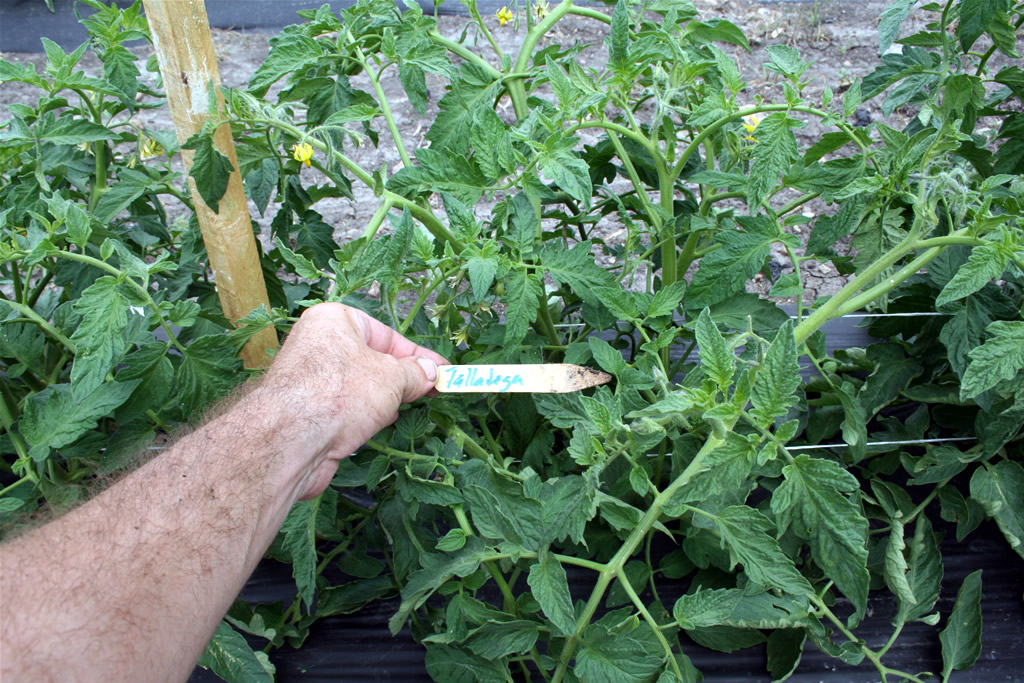
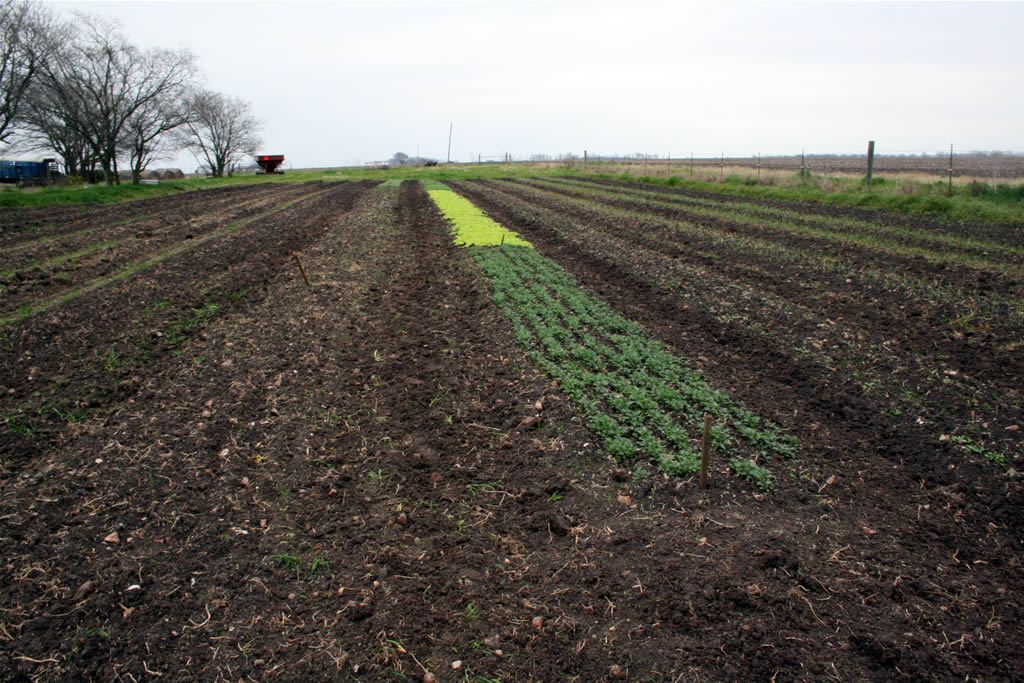
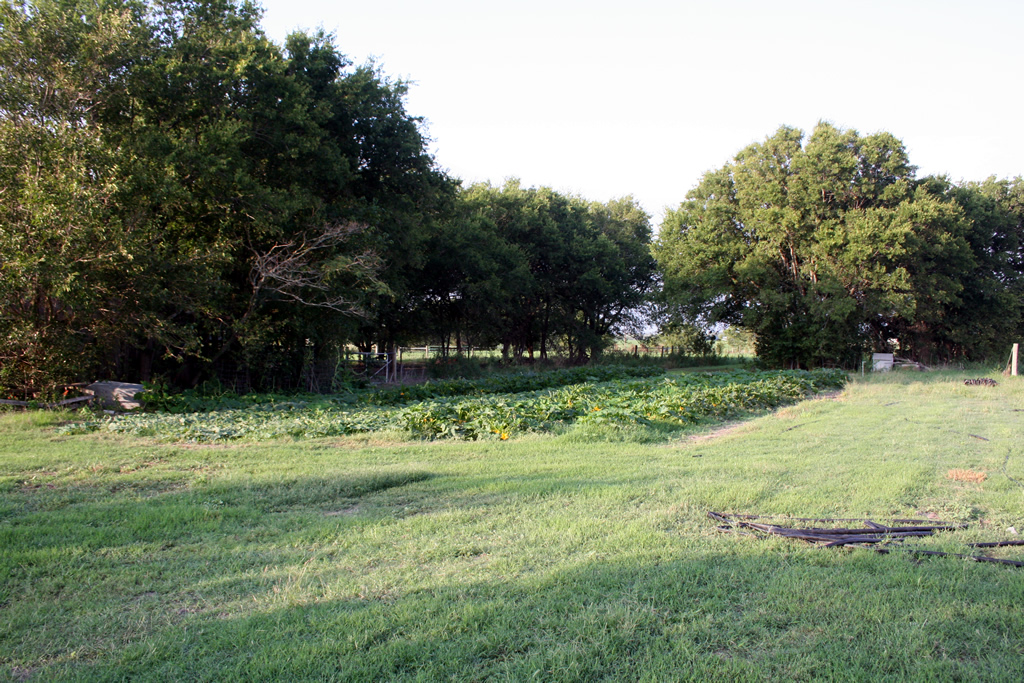
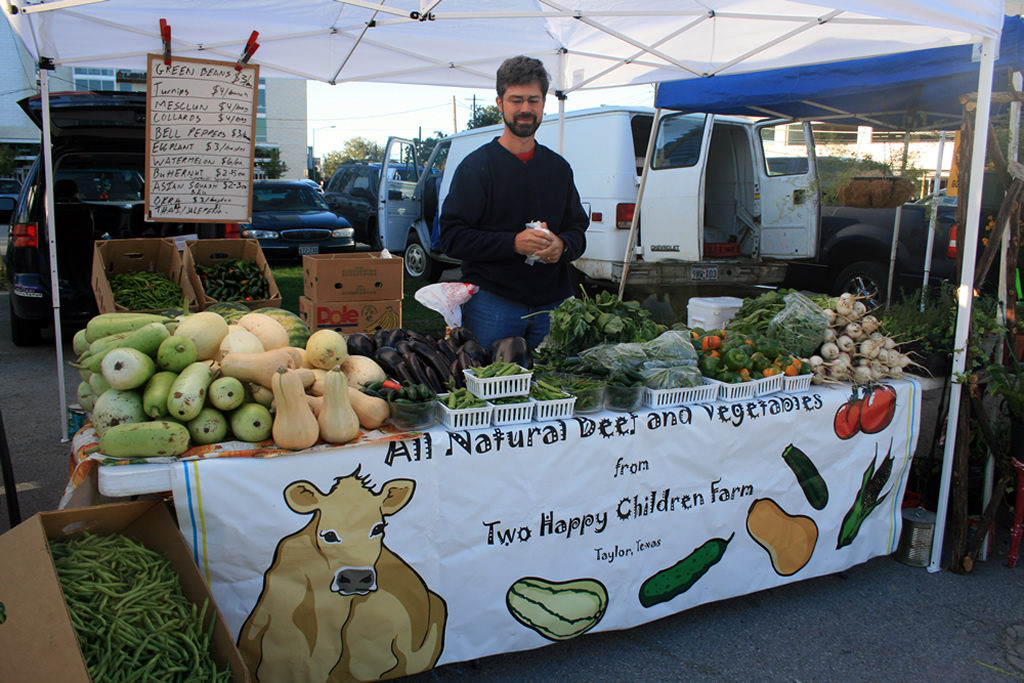
Started in 2003 with a purchase of a farm outside of Taylor, Texas, Two Happy Children farms now grow more than 60 varieties of vegetables on 30 acres. Our specialities are sweet corn, melons, various Asian melons and herbs, and many varieties of heirloom and traditional tomatoes.
Our farm began by raising beef cattle. We wanted to know what went into our beef so we started by feeding several calves and eating and marketing them. We found the differences in our beef compared to what is commonly sold to be amazing. The next thing we grew was tomatoes, again for the same reason. Our first small crop did not produce much, but it did give us a taste for homegrown vegetables. Again, we were motivated because we wanted to know want went into our vegetables.
Fast forward a few years and we are raising more vegetables because we want to have vegetables that taste great and we know how they are produced. Without the constraints other vegetable producers have of long shelf life and shipping, we harvest our product at the peak of ripeness and market it very soon after. We can select varieties that contain great attributes like flavor instead of shelf life.
Q – Why should I buy my produce from you instead of the supermarket?
How old is the produce in the supermarket? Yeah….I don’t know either. At the moment a vegetable is harvested, time is working against you. The longer the veggies sit in a cooler or a shelf, the more nutrients are depleted. Our vegetables go from field to fork in less than 24 hours, so the nutrients, as well as the flavor, are at their peak. A typical tomato passes through no less than 4 hands before it hits the shelf at a supermarket. Our tomatoes are picked and the next hand to touch them is yours!
Latest News
Latest Photos
Newest Members

Copyright ©2009 Two Happy Children Farm All Rights Reserved